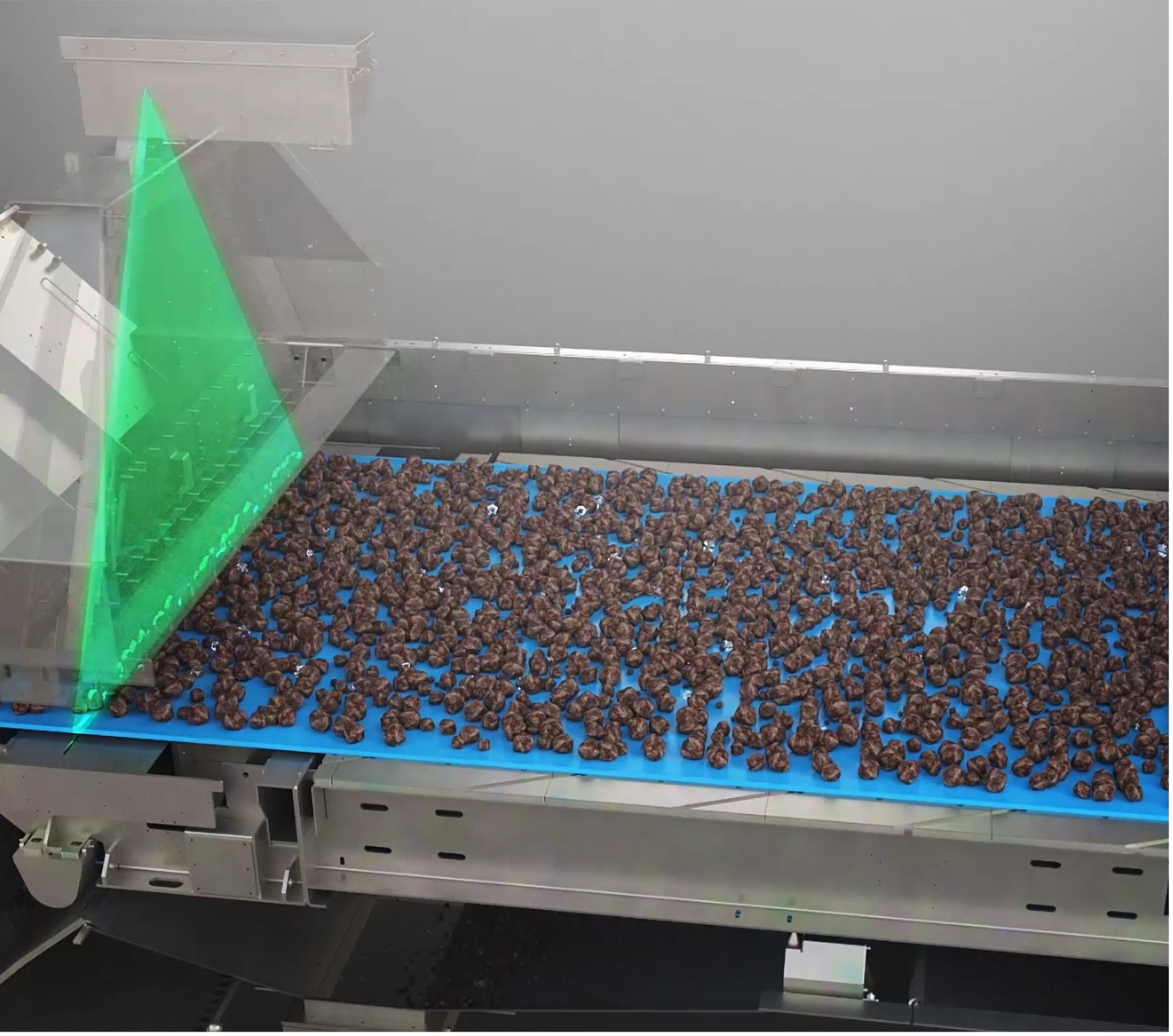
In the global race to build smarter, safer, and more efficient mines, one crucial technology is often overshadowed by flashy software: the sensor. However, for De Beers’ Upstream Technology, sensors are not just background instruments—they are the very bedrock upon which all digitalization, automation, and modern mine designs are built.
Formed in 2024 through the merger of De Beers Marine and Ignite, Upstream Technology was created to deliver a fully integrated, end-to-end system for the company’s upstream operations. Central to this mission is a radical refocusing on the most fundamental layer of mining technology.
The Philosophy: Sensing Before Software
Michael Curtis, Head of Upstream Technology, is unequivocal about the hierarchy of mining tech: you cannot automate what you cannot accurately measure.

“Sensor technology is the foundational building block of any automation,” Curtis explains. “Your sensors need to be working reliably and accurately before you can automate anything. If your sensors fail, your automation fails.”
According to Curtis, this simple truth explains why early automation projects across the mining sector often under-delivered. Historically, companies poured capital into advanced software and control systems while neglecting the underlying sensing layer. “When the inputs are wrong or unstable, every automated decision based on them becomes suspect,” he notes.
To combat this, Upstream Technology operates on a strict order of operations: first, perfect the sensing layer; second, build reliable automation on top of it. Only when these two foundational layers are completely stable does the company introduce artificial intelligence and advanced analytics.
Real-World Impact: From the Seabed to Underground
Today, this “sensors-first” approach touches nearly every aspect of De Beers’ upstream diamond mining operations, driving measurable improvements in both efficiency and safety.
- Transforming Offshore Mining: Seabed crawler mining was once a highly manual process requiring two surface pilots to constantly manipulate joysticks to control the machine’s heading and mining rate. Today, the crawler is largely automated. Sensors continuously track position, heading, depth, and machine health, allowing the system to act as an autopilot. This shift has resulted in vastly improved mining rates and recovery efficiency.
- Enhancing Underground Safety: In underground operations, sensors are quite literally saving lives. Upstream Technology is deploying LiDAR and laser scanning to mitigate fall-of-ground risks. By mapping roof supports and verifying that every single bolt is correctly installed, the technology keeps humans away from hazardous areas. As Curtis puts it, “Sensors do the seeing.”
- Optimizing Processing Plants: Across processing facilities, sensors continuously measure flows, levels, pressures, and densities to keep circuits operating within strict parameters. On heavy equipment, they monitor temperatures, vibrations, and loads, enabling predictive maintenance that prevents catastrophic machinery failures.
The Missing Link: Human Culture
Despite the massive leaps forward in automation and digitalization, Curtis emphasizes that hardware and software are never enough on their own. The ultimate success of sensor technology relies heavily on the humans interacting with it.
“Technology doesn’t work without the right culture,” Curtis warns. “If people bypass systems, the technology won’t work. If people don’t pay attention to systems, the intent of the system fails and it puts them at risk.”
While sensors act as the highly sensitive “eyes and ears” of the modern mine—enabling automation, informing management, and keeping workers out of harm’s way—their full value can only be unlocked when paired with comprehensive training and a rigorous safety culture.As the mining industry continues its transition toward compact, connected, and low-carbon operations, De Beers’ Upstream Technology is proving that success starts at the ground level. Their guiding principle serves as a blueprint for the future of the industry: get the sensing right first, because absolutely everything else depends on it.