The global mining industry has entered a decisive decade. With the 2030 interim milestone for vital carbon and water reduction targets looming, the pressure from investors, governments, and communities has never been higher.
Yet, a distinct challenge has emerged: despite ambitious target-setting and encouraging boardroom commitments, execution on the ground remains highly uneven. The industry has successfully moved beyond the need to define its sustainability ambitions; it is now colliding with the harsh realities of operationalizing them.
To bridge this execution gap, the industry must fundamentally rethink its approach. The key lies in embedding sustainability deep into the core, day-to-day mechanics of how mines function, rather than treating it as a superficial, bolt-on overlay.
The Illusion of “Headline Decarbonization”

Much of the public and industry narrative surrounding mine decarbonization has focused on highly visible, macro-level interventions: massive solar arrays, fully electrified haul fleets, and experimental hydrogen-powered heavy equipment.
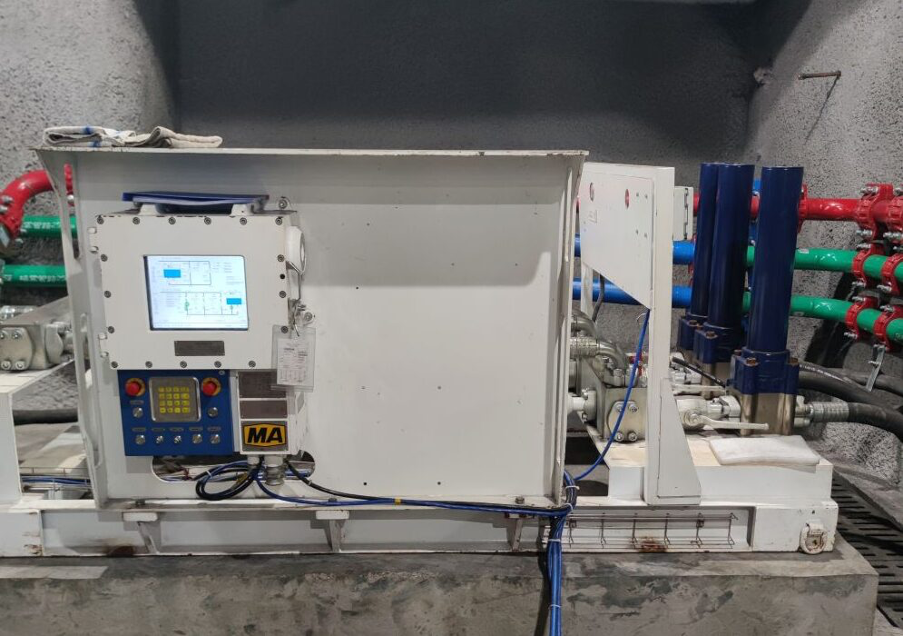
These initiatives are undeniably critical to the future of mining. However, they suffer from an “iceberg effect.” They represent only the visible fraction of the solution. Beneath the surface lies a vast, complex network of energy-intensive micro-systems—fluid handling, dewatering, slurry transport, and process water circulation.
These continuous, foundational functions collectively account for a massive share of a mine’s baseload operational energy use. It is precisely within these unglamorous, “hidden” systems that some of the most immediate, impactful, and cost-effective decarbonization gains can be realized today.
Unearthing the “Hidden Energy” Drain
At their core, mining operations are large-scale energy conversion systems. Moving millions of tons of rock, water, and slurry requires immense, continuous power input, frequently under harsh and highly variable conditions.
Historically, these systems have been plagued by baked-in inefficiencies. Oversized equipment, throttled flows, and poorly matched duty cycles are commonplace. These inefficiencies directly translate into wasted energy and elevated emissions. Because they are not visible at a headline level, they are often ignored—persisting across decades of operation and quietly compounding both operational costs and environmental impact.
Addressing this hidden energy drain requires a paradigm shift: moving away from component-level fixes toward system-level optimization.
- Dynamic Adjustment: High-efficiency motor technologies deliver massive gains when paired with variable speed drives (VSDs) that perfectly align energy consumption with real-time demand.
- Ending the Throttling Era: Rather than operating at fixed, maximum speeds and dissipating excess energy through mechanical throttling, modern systems dynamically adjust their output. This slashes power consumption while significantly reducing mechanical stress and wear-and-tear.
When advanced pumping systems are paired with automated flow control, they respond to changing process conditions with surgical precision. Industry data suggests that such system-level interventions can reduce energy consumption in fluid systems by 30% to 40%, delivering a rapid return on investment (ROI) that easily justifies the capital expenditure.
Mastering the Water-Energy Nexus
Because mining is inherently water-intensive, water stewardship presents a parallel, increasingly urgent dimension of the net-zero equation. In many of the world’s premier mining jurisdictions (such as Chile, Australia, and parts of Africa), severe water scarcity has transitioned from an environmental concern to a defining operational constraint. Achieving “net-zero water” is no longer just good PR; it is a business-critical requirement for securing a license to operate.
Water and energy in mining are inextricably linked. Pumping heavy water across vast distances and elevations requires immense energy. Therefore, saving water inherently saves energy.
Operational technologies play a pivotal role in this nexus. The industry is rapidly shifting toward closed-loop water systems, which prioritize aggressive recycling and reuse over continuous freshwater withdrawal. By integrating high-efficiency pumping, advanced filtration, and treatment processes, mines can achieve spectacular water reuse rates of 50% to 80%. This dramatically lowers both the environmental footprint and the operational risk associated with local droughts.
The Digital Connective Tissue: AI, IoT, and Optimization
None of this optimization is possible without real-time data. Digitalization is the connective tissue that binds these mechanical and environmental advances together.
Intelligent water management systems, equipped with IoT sensors and telemetry, now provide continuous visibility into flow rates, pressure gradients, water quality, and storage levels. This allows operators to prevent over-pumping, instantly detect leaks, and optimize distribution across sprawling mine sites.
Furthermore, the integration of Artificial Intelligence (AI) is fundamentally reshaping mine management:
- From Reactive to Predictive: Historically, maintenance has been reactive (fixing things when they break) or schedule-based (replacing parts prematurely). Today, AI-driven predictive models analyze continuous data streams to identify micro-patterns of wear and performance degradation.
- Reducing Embodied Carbon: By predicting issues before they escalate, mines can execute targeted maintenance. This prevents energy-intensive, unplanned machine restarts and extends the lifecycle of heavy assets, thereby lowering the “embodied carbon” associated with manufacturing replacement equipment.
Empowering the Broader Energy Transition
Crucially, these operational micro-improvements are not a substitute for macro-level energy transition initiatives—they are the vital enablers of it.
Electrifying a mining fleet only delivers maximum environmental and financial benefit when the underlying systems are efficient. An electric haul truck powered by a solar farm still relies on a vast network of pumps, conveyors, and processing equipment. If those background systems are inefficient and power-hungry, they will dilute the overall impact of the mine’s electrification strategy.
Furthermore, introducing renewable energy into a mine introduces supply variability (e.g., the sun doesn’t always shine; the wind doesn’t always blow). Intelligent, system-level controls can adapt to this fluctuating energy availability. For example, smart systems can modulate demand, scheduling energy-intensive pumping or fluid handling tasks during peak renewable generation hours. In this way, system efficiency enhances a mine’s flexibility and resilience.
Integration is the Future
Looking ahead, the next phase of mining decarbonization will be defined by radical integration. The traditional silos separating energy systems, water management, and IT/digital platforms will dissolve.
The mines of the future will rely on holistic control platforms where AI coordinates water management and energy consumption in real-time, perfectly balancing throughput with environmental constraints. Achieving this demands a new operational mindset—one that views sustainability not as a regulatory burden, but as a primary driver of mechanical innovation and cost efficiency. It will require deep collaboration across disciplines, merging the expertise of mechanical engineers, data scientists, and environmental managers.
Ultimately, the mining companies that emerge as leaders in the 2030s will be those that recognize a fundamental truth: Net-zero is not achieved through a single, isolated, headline-grabbing intervention. It is achieved through the cumulative, compounded effect of thousands of smart, system-level operational decisions.
By embedding radical efficiency into the very fabric of their operations—across fluid handling, water networks, and digital infrastructure—mining companies can finally move beyond aspiration and into execution.