


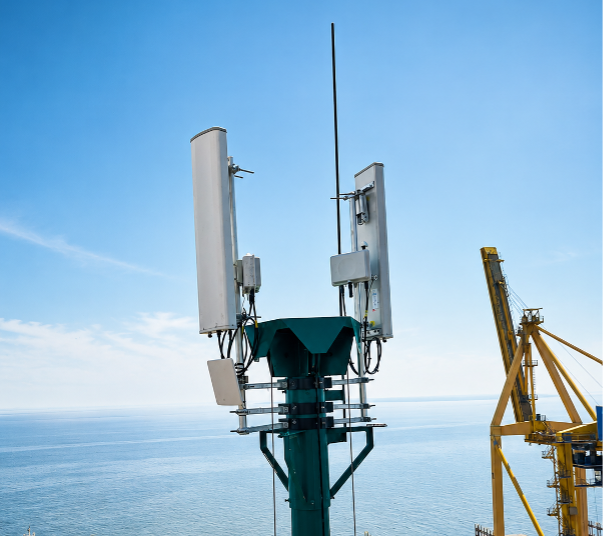
As digital transformation sweeps across Africa’s mining sector, the demand for robust, high-performance connectivity is paramount. Technologies such as autonomous equipment, connected workers, Industrial IoT, predictive maintenance, and real-time operational visibility all hinge on one critical foundation: a Mobile Private Network (MPN).
Sedna Africa, a leader in deploying mobile private networks in African mining environments, emphasizes that the success of any MPN deployment is determined long before the first radio is installed. Through detailed MPN readiness surveys, they ensure mining operations possess the necessary infrastructure, network architecture, and operational preparedness to support advanced connectivity solutions.
The Critical Role of MPN Readiness Surveys
Raymond Mhlongo, Technical Director at Sedna Africa, highlights the importance of the survey phase:

“Many people see the deployment of a private LTE or 5G network as the starting point of the project, but in reality the success of the network is determined during the survey phase. An MPN survey allows us to understand the operational environment, identify risks and constraints, assess existing infrastructure and ensure that the final network design is aligned to the mine’s operational requirements both now and into the future.”
Mining environments present unique challenges for wireless communications, including vast geographical footprints, dynamic topography, remote operating areas, and mission-critical applications. These factors necessitate meticulous planning before any network infrastructure is deployed.
Sedna Africa’s Comprehensive Survey Process
Sedna Africa’s MPN surveys are structured to provide a holistic view of a mine’s connectivity ecosystem:
- Defining Coverage Requirements: The process begins by clearly outlining coverage needs across the entire mining operation, encompassing open-pit areas, processing plants, workshops, dumps, haul roads, operational zones, and high sites.
- Stakeholder Collaboration: The team collaborates closely with mine stakeholders to understand site-specific requirements, existing infrastructure, and operational priorities.
- Detailed Infrastructure Assessments: Comprehensive evaluations are conducted on:
- Server rooms and data centres
- High sites and towers
- Fiber infrastructure
- Power availability and backup systems
- Radio frequency (RF) environments
This gathered information is then fed into the LTE or 5G RF planning process, which includes coverage modelling, high-site selection, antenna placement, backhaul planning, and capacity design.
Identifying and Mitigating Risks
“Our objective is to build a complete picture of the mine’s connectivity ecosystem,” says Mhlongo. “We evaluate everything from fibre and backhaul capacity to tower suitability, power availability and potential sources of radio interference. This allows us to identify any infrastructure gaps before deployment begins.”
The survey process also assesses how proposed MPN infrastructure will integrate with existing operational technology (OT) environments, ensuring seamless support for current and future digital initiatives. Crucially, it helps identify potential risks that could impact implementation timelines, costs, or future network performance. These risks can include:
- Limited tower space
- Insufficient backup power
- Fiber constraints
- Third-party infrastructure dependencies
- RF spill-over
By identifying these considerations early, Sedna Africa provides clear recommendations on leveraging existing infrastructure, necessary upgrades, and optimal network design for peak performance.
The Future of Mining: Enabled by Robust Connectivity
“Mining companies are increasingly investing in digital transformation initiatives, but those investments depend on reliable connectivity,” explains Mhlongo. “The survey gives us the information needed to design a practical, scalable and future-ready network that supports the mine’s operational goals.”
Anton Fester, CEO of Sedna Africa, emphasizes the foundational role of connectivity:
“The mining industry is moving rapidly towards a future defined by automation, data-driven decision-making and connected operations. None of these innovations are possible without robust and resilient connectivity. What sets successful projects apart is not the technology itself, but the planning that happens before deployment. Our MPN surveys provide the foundation for that success by ensuring that network designs are practical, scalable and aligned with the realities of the operating environment. Ultimately, we are helping mines build the digital backbone that will support the next generation of mining across Africa.”
Comprehensive Survey Findings and Implementation
Upon completion, the survey findings are compiled into a comprehensive report. This report assesses network readiness, fibre and backhaul availability, power infrastructure, high-site suitability, RF considerations, and any constraints impacting deployment. These findings directly inform the MPN design and capacity planning process, guiding decisions on:
- LTE or 5G coverage modelling
- High-site selection
- Network integration
- Backhaul design
- Power requirements
- Implementation planning
As African mining operations increasingly adopt automation, connected worker solutions, Industrial IoT, fleet management, safety systems, and advanced analytics, private mobile networks are becoming an indispensable component of modern mining infrastructure. These networks also offer critical capabilities like last-known-location tracking, assisting response teams during missing-person or lone-worker incidents.
“Connectivity is no longer simply about communications,” concludes Mhlongo. “It has become the foundation that enables digital mining. Our role is to ensure that foundation is designed correctly from the outset, giving our customers the confidence to deploy technologies that improve safety, productivity and operational efficiency.”
By adopting a structured, engineering-led approach to MPN readiness assessments, Sedna Africa empowers mining companies to reduce risk, accelerate deployment timelines, and maximize the return on their digital transformation investments. As the mining sector evolves towards smarter, more connected operations, Sedna Africa remains dedicated to building the resilient digital infrastructure essential for the future of mining across the continent.